It's highly overdue, but here are some pictures of the capsule.
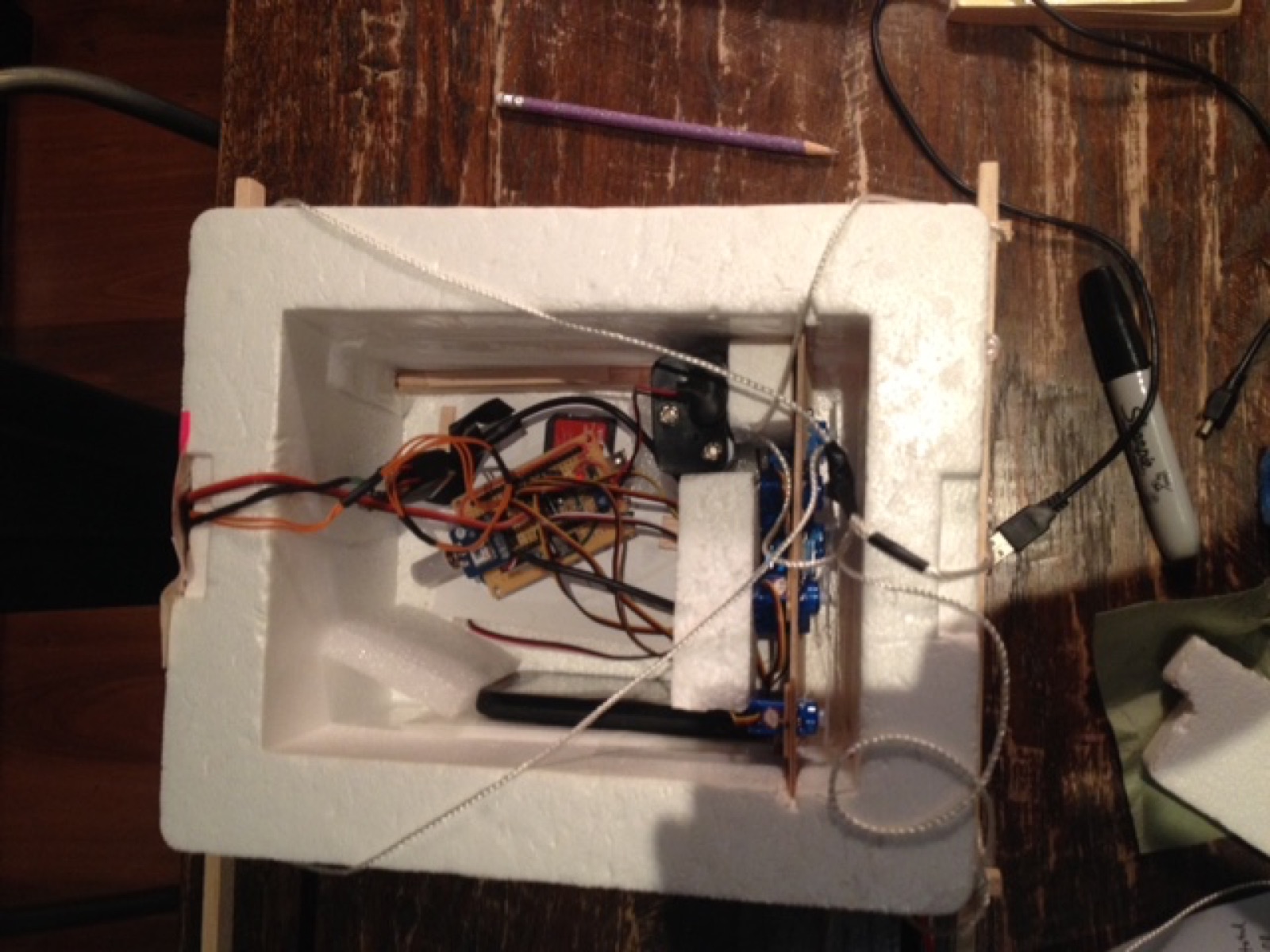
The first is the innards of the polystyrene box (1.5 inch thick walls!). You can see the main robot circuit board to the left. On that there's a GPS chip with antenna, plus temperature sensors. Wrapped up in electrical tape is a small 808 keychain camera. It has an external camera lens mounted underneath the box pointing down. Hopefully i'll get some spectacular shots of the aircraft tumbling away at altitude. There's one phone with its lens pointing towards the aircraft, and another (not inserted) pointing the other way at nothing. On the right is the external battery pack and a thin piece of plywood that holds 5 servos. These servos cycle on release and pull on thin fishing line that goes through a thin straw at the bottom right.
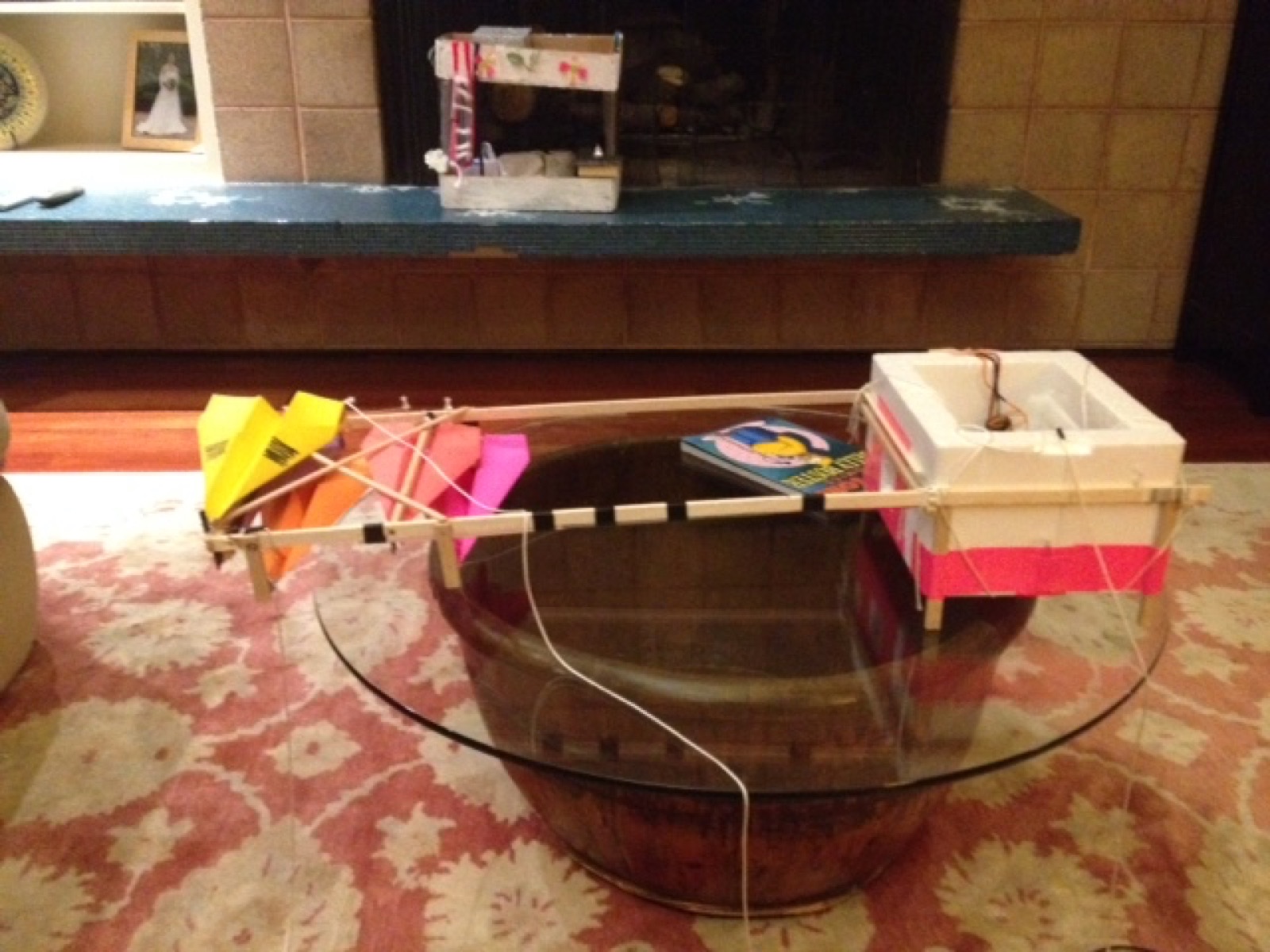
Next up, an external view. Here you can see the entire capsule and 5 paper airplanes ready to go. They are secured by taught fishing line, and when the servos cycle, they pull a pin at the end of the airplane that releases the fishing line and the airplanes drop.
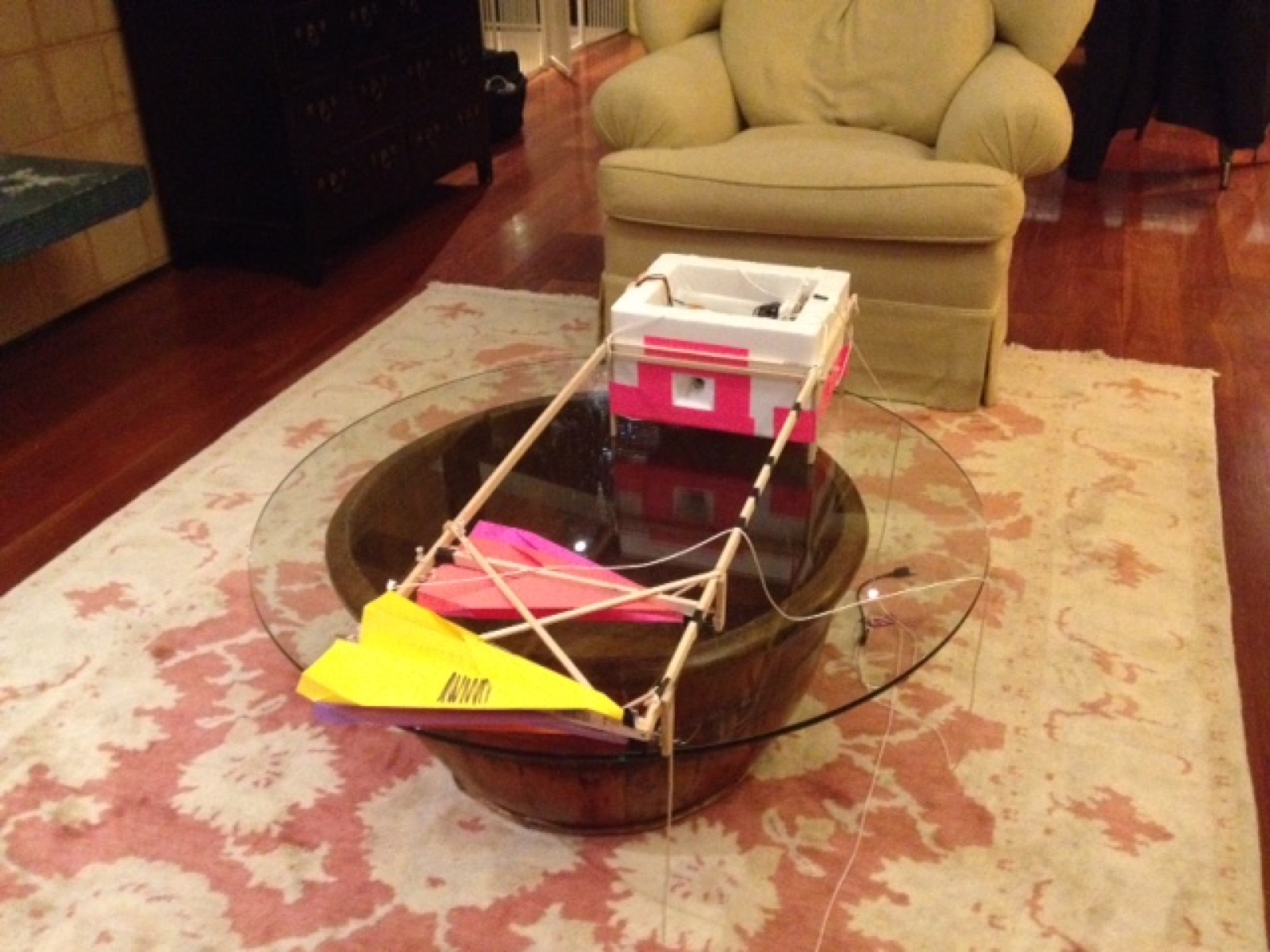
Now a side view - here you can see a small hole where the android phone's camera points outwards.
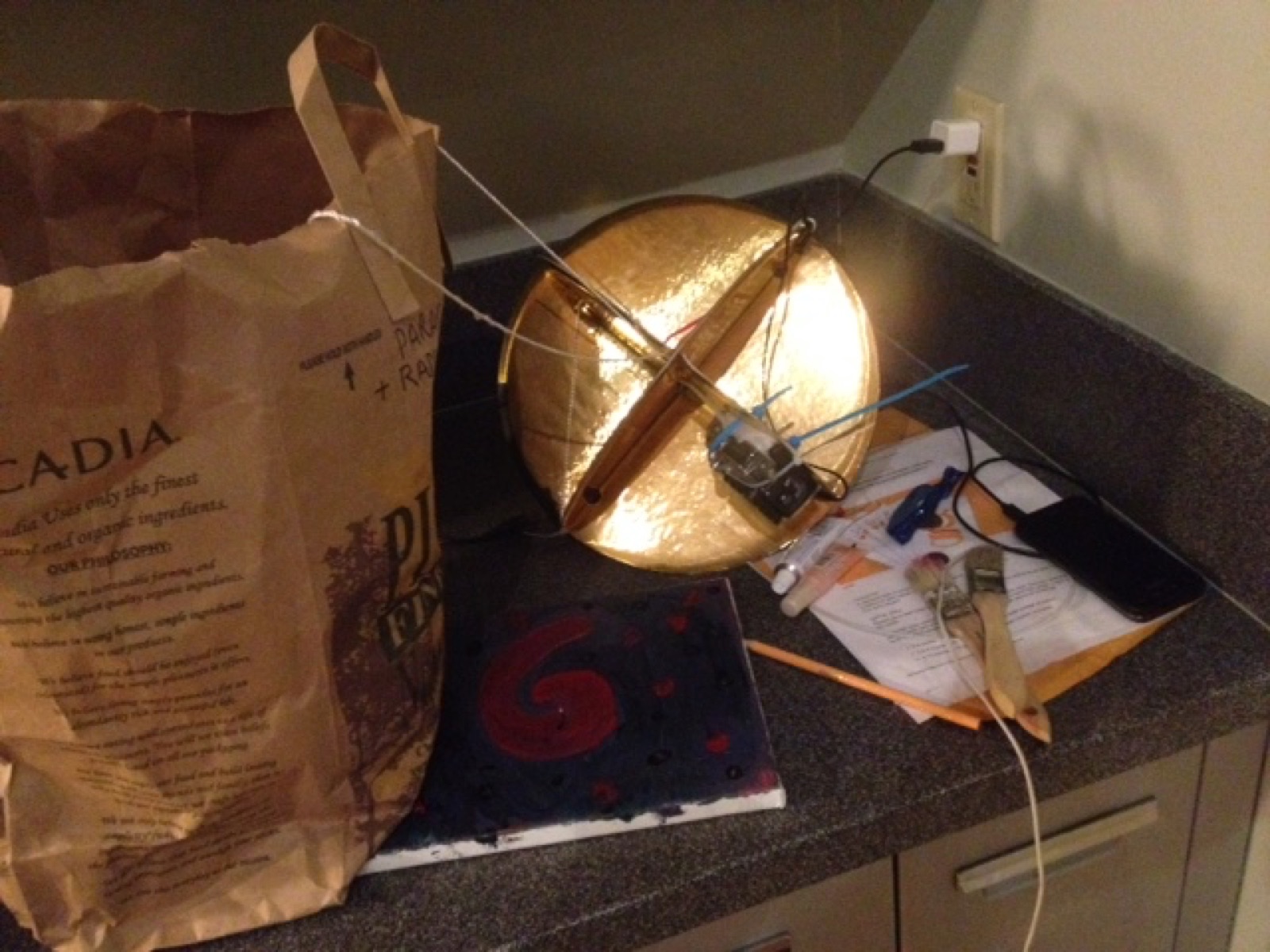
Finally, no decent balloon experiment doesn't include a radar reflector. This one is a simple marine radar reflector made of foam covered in something. Here i mount a downward facing GoPro camera with an enormous external battery. The whole thing will probably spin a lot, but there should be some excellent downward video clips from this.
The whole setup weighs 1500 grams, just over 3 pounds fully loaded.