Well, most of us knew this anyway, and there are datasheets that say this too, so I went with a two battery design for the aircraft: (1) a small 9volt Lithium energizer battery (the silver kind you can buy in stores) and (2) two 500mAh Lithium Ion batteries.
The 9 volt Lithium energizer battery's job is to provide power to cut-down the balloon, trickle charge the Lithium Ion batteries, and heat them through 100ohms of resitive wire (~700mW total) - all controlled by the onboard computer
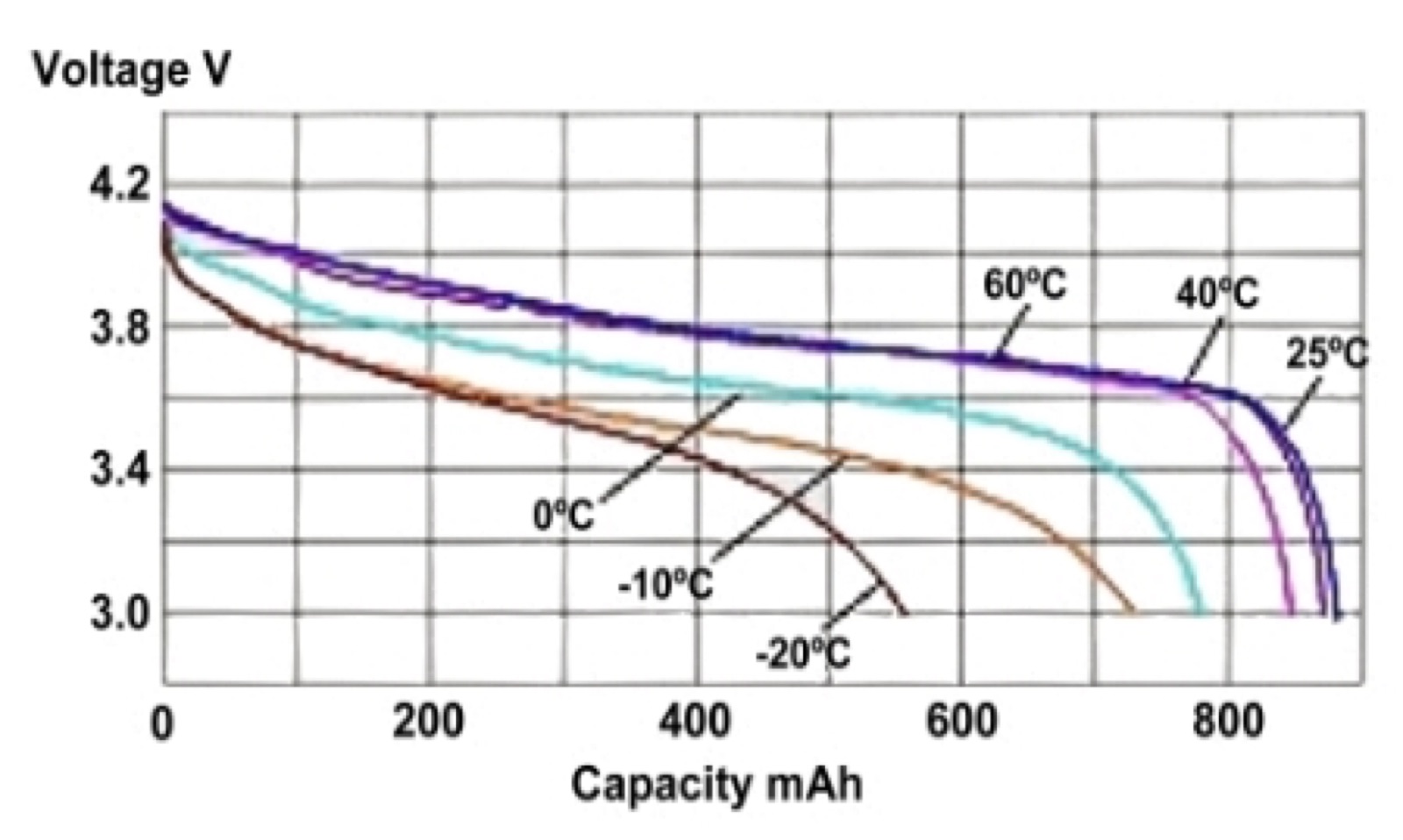
The Lithium Ion batteries are required to power the satellite modem and the cellular modem, plus they'll power the rest of the circuitry as well, it's just that they perform terribly below about 0 degrees Celcius. graph here:
So, i used the die-temperature sensor on a sim800 chip that sits right on top of the batteries as a proxy for a temperature sensor (I also have zero pins left for a TMP36 or anything). It's not ideal, as it's not in the battery, and the chip is pretty energy inefficient, so almost certainly runs a few degrees above ambient. Hence, I tested the entire circuitboard in a cooler with dry ice to try identify the point at which i needed to turn on the heater.
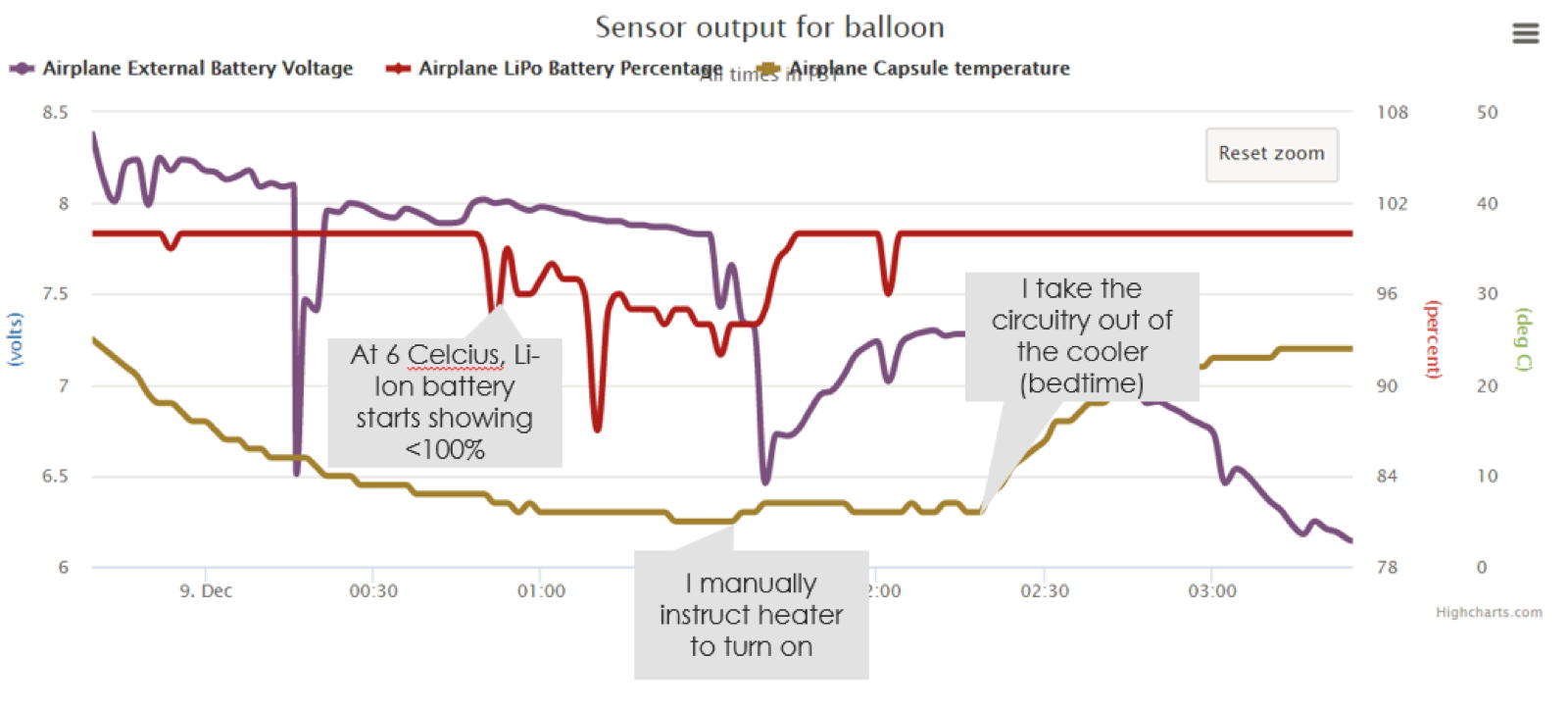
Results below! The sim800 die temperature dropped for a long time, and when it hit 5-6 degrees Celcius, the Li-Ion battery showed 94-96% capacity, despite being trickle charged (which i thought would help). I instructed the heater to turn on for 2-3 minutes, which rose the die temp 2 degrees to 7 Celcius, at which point the Li-Ion battery showed 100% again. I'll take 7 Celcius as the thermostat threshold based on this, although in the upper atmosphere, there's so little air to chill components that I suspect 5 would also do. Given i have plenty (10-12 hours) of battery, i am fine running the heater more.